Strong Column Weak Beam Explained: The Most Important Rule in Earthquake Design
Published on 2026-06-11
During a major earthquake, a building will experience forces far beyond those used in normal design.
The question is:
👉 Where should the structure fail first?
Should the columns fail?
Or should the beams fail?
Modern seismic design has a clear answer:
👉 Strong Column – Weak Beam
This simple concept has saved countless buildings from collapse.
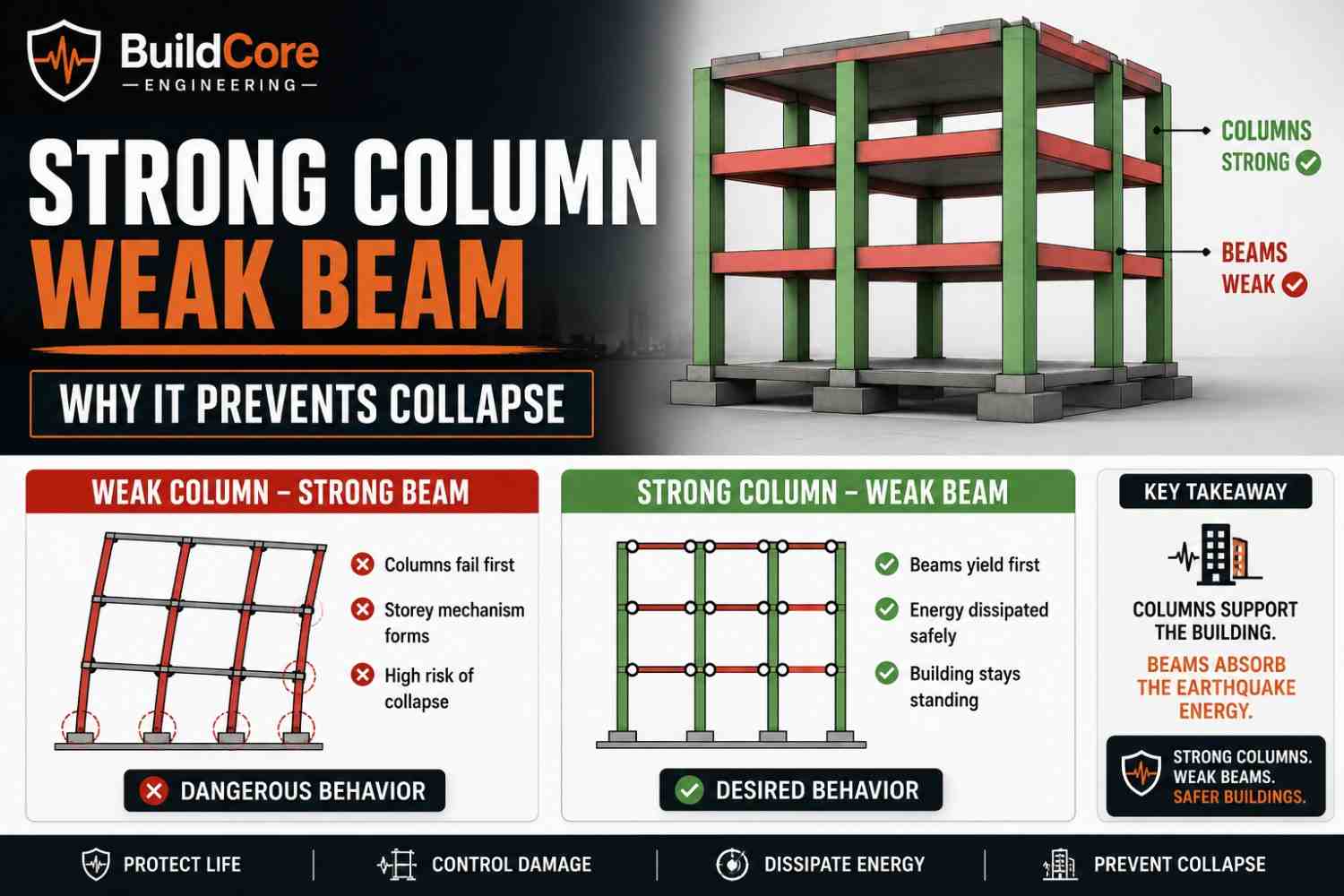
🧱 What is Strong Column Weak Beam?
Strong Column Weak Beam (SCWB) is a seismic design philosophy that ensures:
- Columns remain stronger than beams
- Beams yield before columns
- Energy is dissipated safely during earthquakes
In simple terms:
👉 It is better for beams to crack and deform than for columns to fail.
🧠 Why is This Important?
Columns support the entire structure.
If a column fails:
👉 Multiple floors can lose support.
👉 Progressive collapse may occur.
However, if beams yield:
- The building can absorb energy
- Collapse is less likely
- Occupants have a better chance of survival
⚠️ What Happens if Columns Fail First?
Imagine a building where columns are weaker than beams.
During an earthquake:
- Columns experience large bending moments
- Plastic hinges form in columns
- Story stiffness decreases rapidly
- Collapse mechanism develops
This is known as a:
👉 Weak Column – Strong Beam Mechanism
And it is one of the most dangerous structural failures.
🌀 The Desired Earthquake Behavior
Engineers want plastic hinges to form in beams.
A typical sequence is:
- Beams yield first
- Energy is dissipated
- Columns remain stable
- Building remains standing
This behavior is called:
👉 Ductile Frame Action
📘 Code Requirement
Modern seismic codes require strong column weak beam behavior.
For special moment frames, codes generally require:
at beam-column joints.
This ensures columns have greater flexural capacity than beams.
🏗️ Real-World Analogy
Think of a tree during strong wind.
- Small branches bend and break
- The trunk remains standing
Beams are like branches.
Columns are like the trunk.
👉 The trunk must survive.
🔗 Related Concepts
👉 Why Buildings Collapse During Earthquakes
👉 Torsional Irregularity Explained
⚠️ Common Mistakes
- Oversized beams with weak columns
- Ignoring joint design
- Poor reinforcement detailing
- Not checking capacity ratios
🎯 Quick Summary
✔ Columns should be stronger than beams
✔ Beams should yield first
✔ Energy should be dissipated through beam hinging
✔ Column failure can lead to collapse
✔ Strong Column Weak Beam is a cornerstone of seismic design
🏁 Conclusion
Strong Column Weak Beam is one of the most important concepts in earthquake-resistant design.
It ensures that damage occurs in a controlled manner and greatly reduces the risk of collapse.
👉 A damaged beam can be repaired.
👉 A failed column can bring down an entire building.
That's why engineers design for:
Strong Columns. Weak Beams. Safer Buildings.
Latest Articles
Learn structural engineering concepts and practical insights
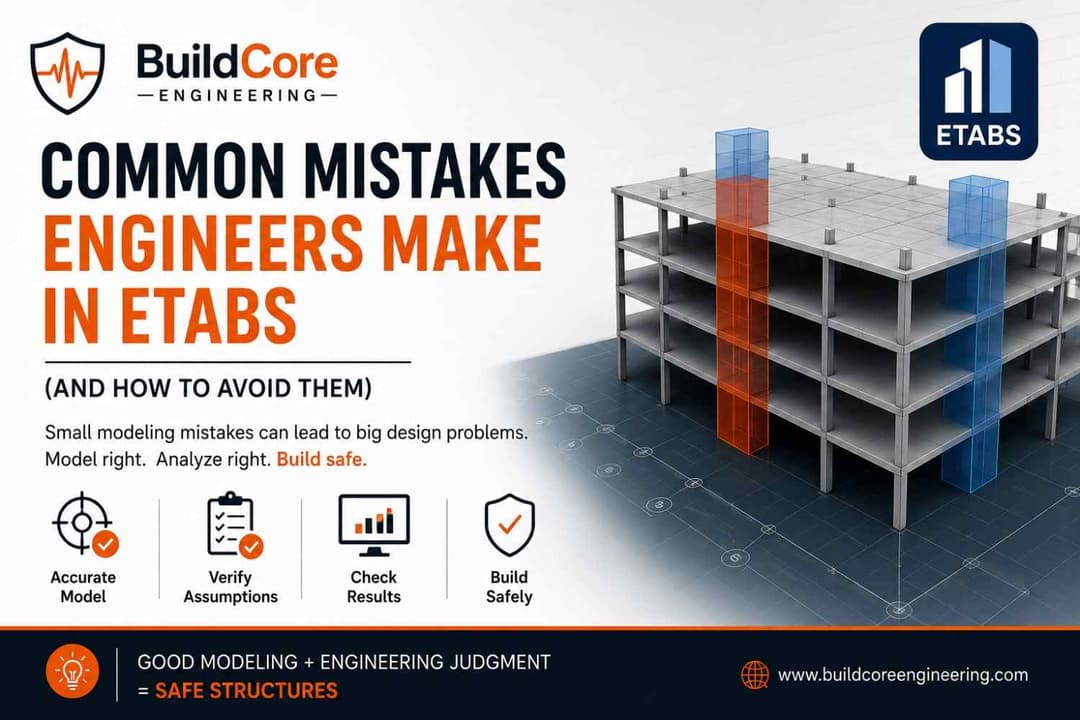
Common Mistakes Engineers Make in ETABS (And How to Avoid Them)
A practical guide to the most common ETABS modeling mistakes — from wrong mass source settings to incorrect diaphragm assumptions — and exactly how to fix them.
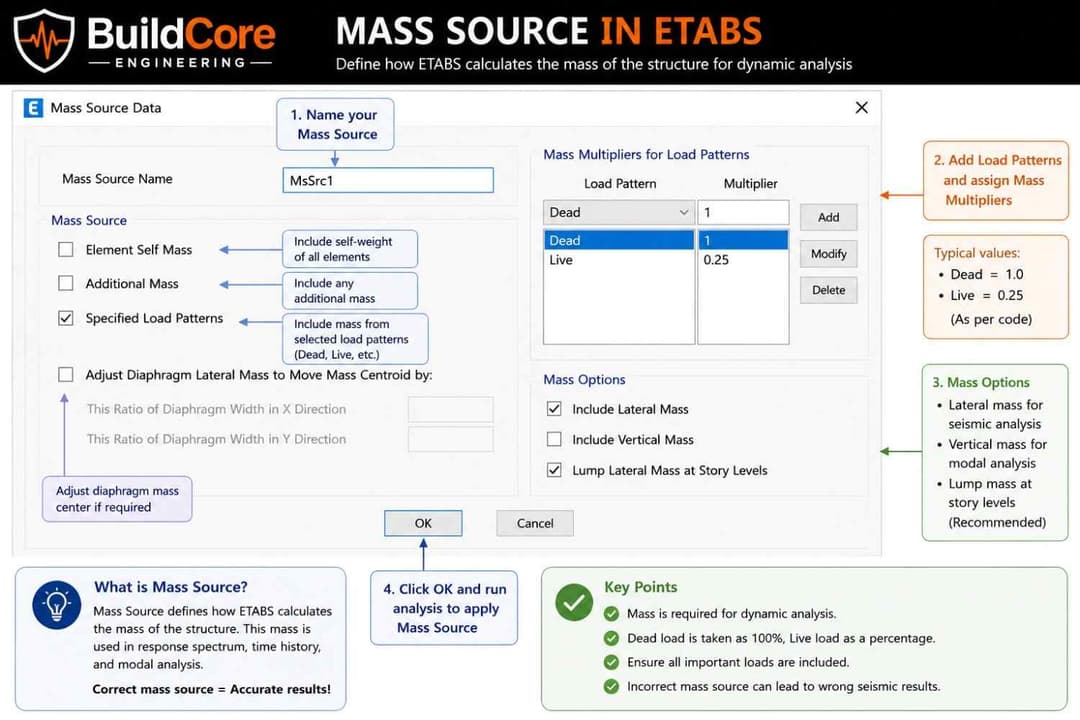
What is Mass Source in ETABS? A Simple Explanation for Structural Engineers
Learn what mass source is in ETABS, why it is important in seismic analysis, and how incorrect mass definition can lead to wrong results.

How AI is Changing Structural Engineering (And What Engineers Should Know)
Discover how AI is transforming structural engineering, what it can and cannot do, and what engineers need to understand to stay ahead.