How AI is Changing Structural Engineering (And What Engineers Should Know)
Published on 2026-04-26
A few years ago, structural engineering meant long calculations, manual checks, and hours of modeling.
Today, something is changing.
Not slowly.
But rapidly.
Artificial Intelligence is entering structural engineering — and it’s starting to reshape how engineers work.
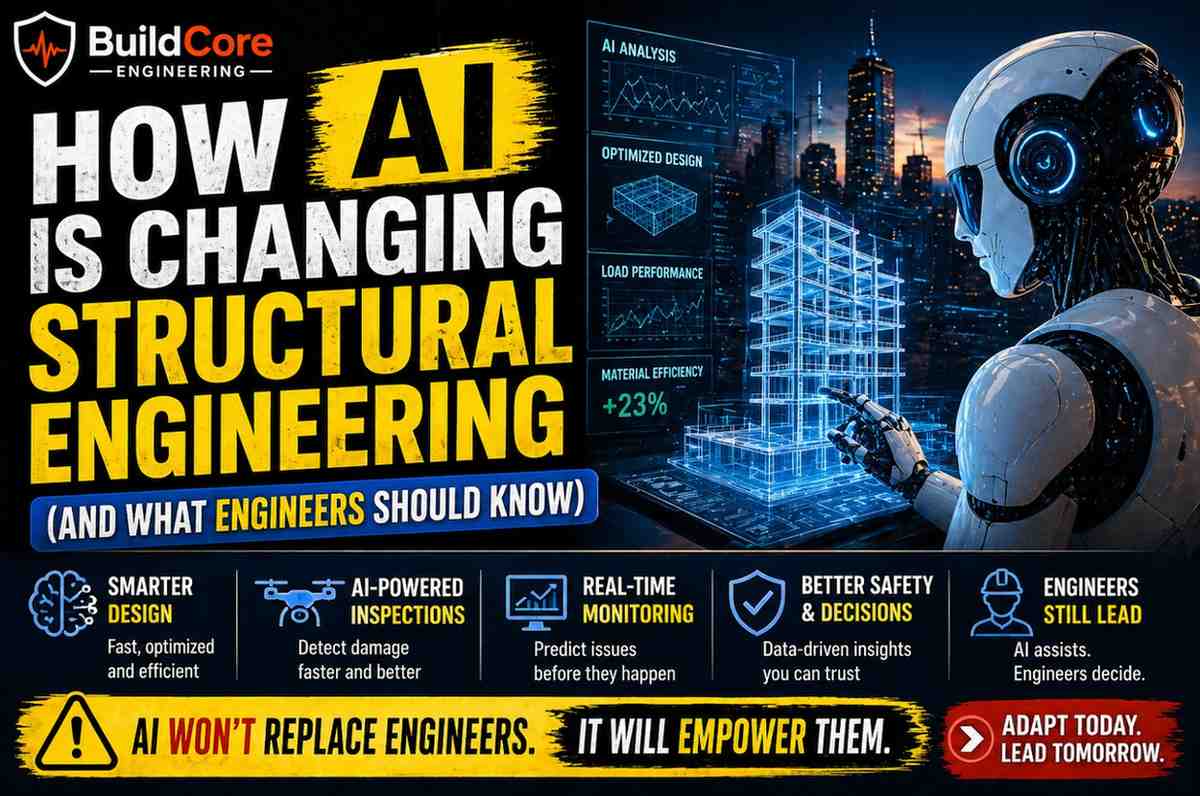
🧠 What AI Actually Means (In Simple Terms)
AI doesn’t mean machines replacing engineers.
It means tools that can:
- Learn from data
- Recognize patterns
- Assist in decision-making
Think of it as a smart assistant — not a replacement.
🔍 Where AI is Already Making an Impact
AI is not just a future concept. It is already being used in real engineering work.
Faster Analysis
AI can process large amounts of data quickly and help identify critical scenarios faster than manual methods.
Smarter Design
Instead of trial and error, AI can suggest efficient design options based on performance and material usage.
Damage Detection
AI can analyze images from drones or cameras to detect cracks, corrosion, and structural damage automatically.
Monitoring Structures
With sensors and data, AI can track how structures behave over time and detect unusual patterns early.
⚠️ What AI Cannot Do
Despite all its capabilities, AI has clear limits.
It does not:
- Understand real-world context fully
- Take responsibility for safety
- Replace engineering judgment
AI can give results.
👉 But engineers must decide.
🧠 The Real Shift in Engineering
AI is not replacing engineers.
It is changing their role.
Instead of spending time on repetitive work, engineers will focus more on:
- Understanding structural behavior
- Making critical decisions
- Designing better systems
⚠️ The Risk of Blind Trust
One of the biggest dangers is relying on AI without understanding it.
AI can:
- Make incorrect assumptions
- Miss important details
- Produce misleading outputs
That’s why engineers must always verify results.
👉 AI should assist — not replace thinking.
🔗 Related Insight
👉 Why Overdesign Can Be Just as Dangerous as Underdesign
🧠 What Engineers Should Do Now
You don’t need to become an AI expert.
But you should:
- Understand how AI tools work
- Use them where they add value
- Always question results
Engineers who combine AI + fundamentals will have a strong advantage.
🎯 Key Takeaway
AI is changing how engineering is done.
But it is not changing what engineering is.
👉 Engineering is still about understanding behavior, ensuring safety, and making responsible decisions.
🏁 Conclusion
Artificial Intelligence is not the future of structural engineering.
It is already here.
The real question is not whether AI will be used.
👉 It is how engineers will use it.
👉 Those who adapt will lead.
👉 Those who rely blindly will struggle.
👉 And those who understand both technology and fundamentals will define the future.
🔗 Want to Learn More?
👉 Why Drift is More Dangerous Than Force
Latest Articles
Learn structural engineering concepts and practical insights
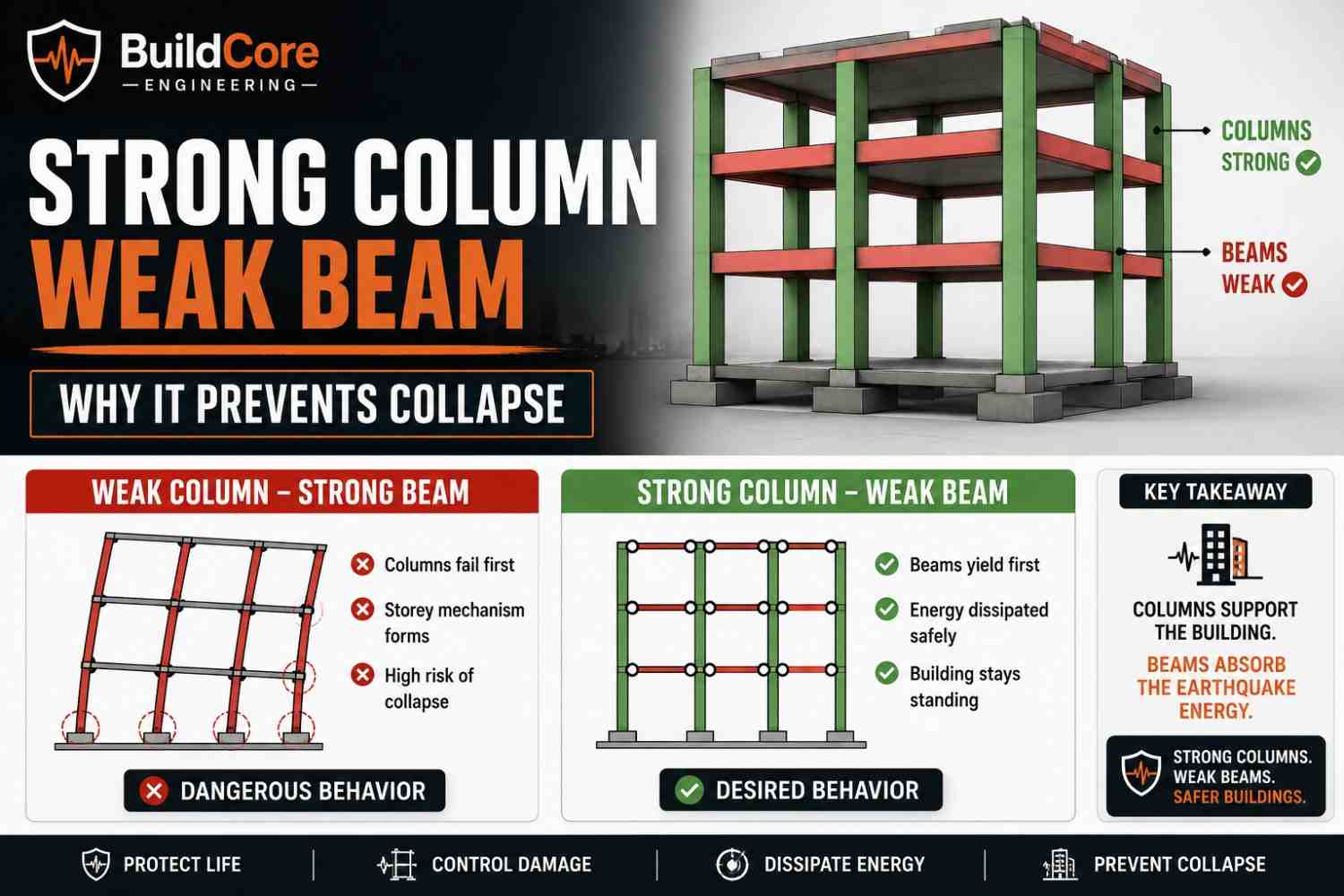
Strong Column Weak Beam Explained: The Most Important Rule in Earthquake Design
Learn what Strong Column Weak Beam means, why it is essential in seismic design, and how it prevents building collapse during earthquakes.
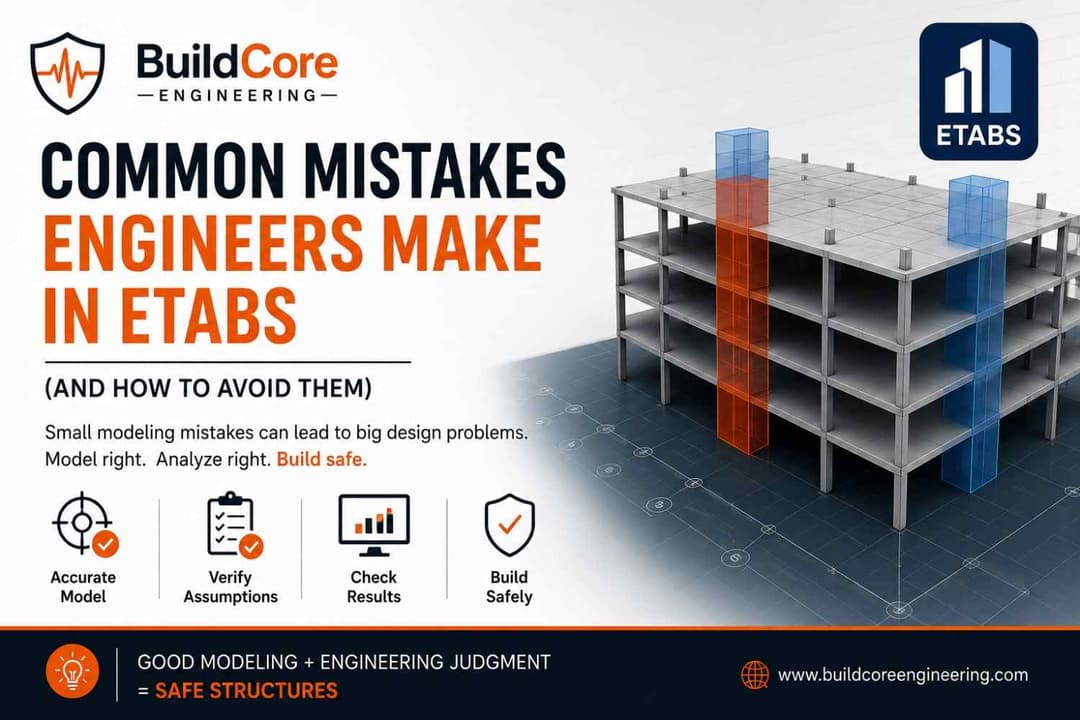
Common Mistakes Engineers Make in ETABS (And How to Avoid Them)
A practical guide to the most common ETABS modeling mistakes — from wrong mass source settings to incorrect diaphragm assumptions — and exactly how to fix them.
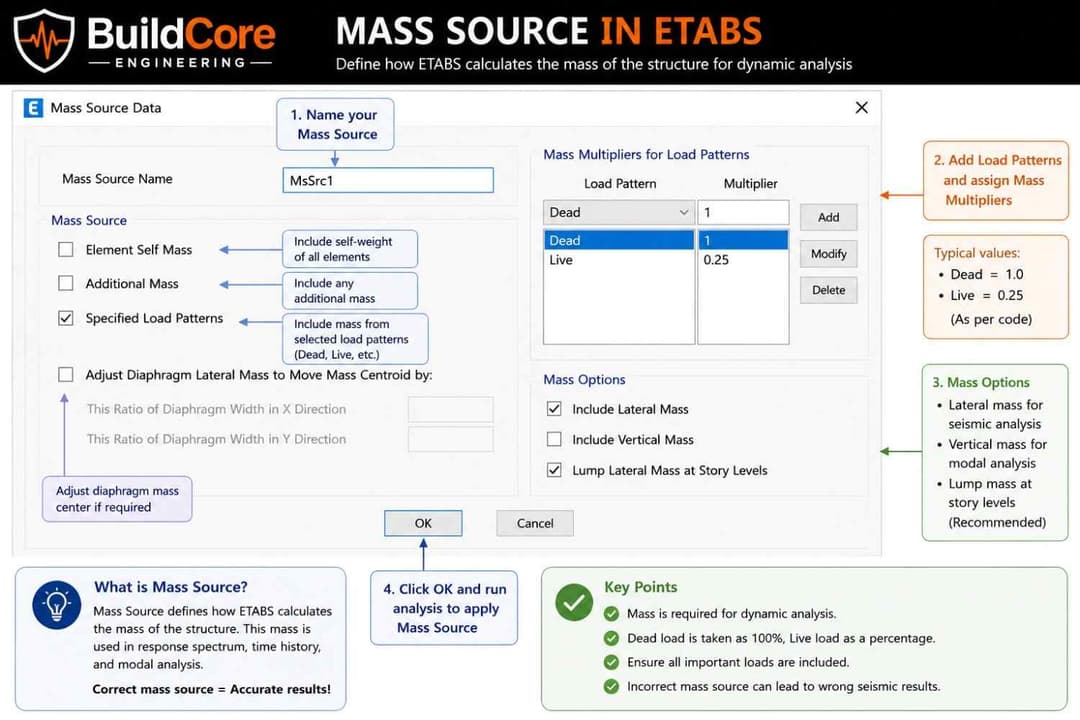
What is Mass Source in ETABS? A Simple Explanation for Structural Engineers
Learn what mass source is in ETABS, why it is important in seismic analysis, and how incorrect mass definition can lead to wrong results.