Why Buildings Collapse During Earthquakes (Simple Explanation Everyone Should Know)
Published on 2025-01-03
In 2023, a massive earthquake struck Turkey and Syria.
Thousands of buildings collapsed within seconds.
But here’s what shocked engineers the most:
👉 Many of those buildings were not supposed to fail.
So what really went wrong?
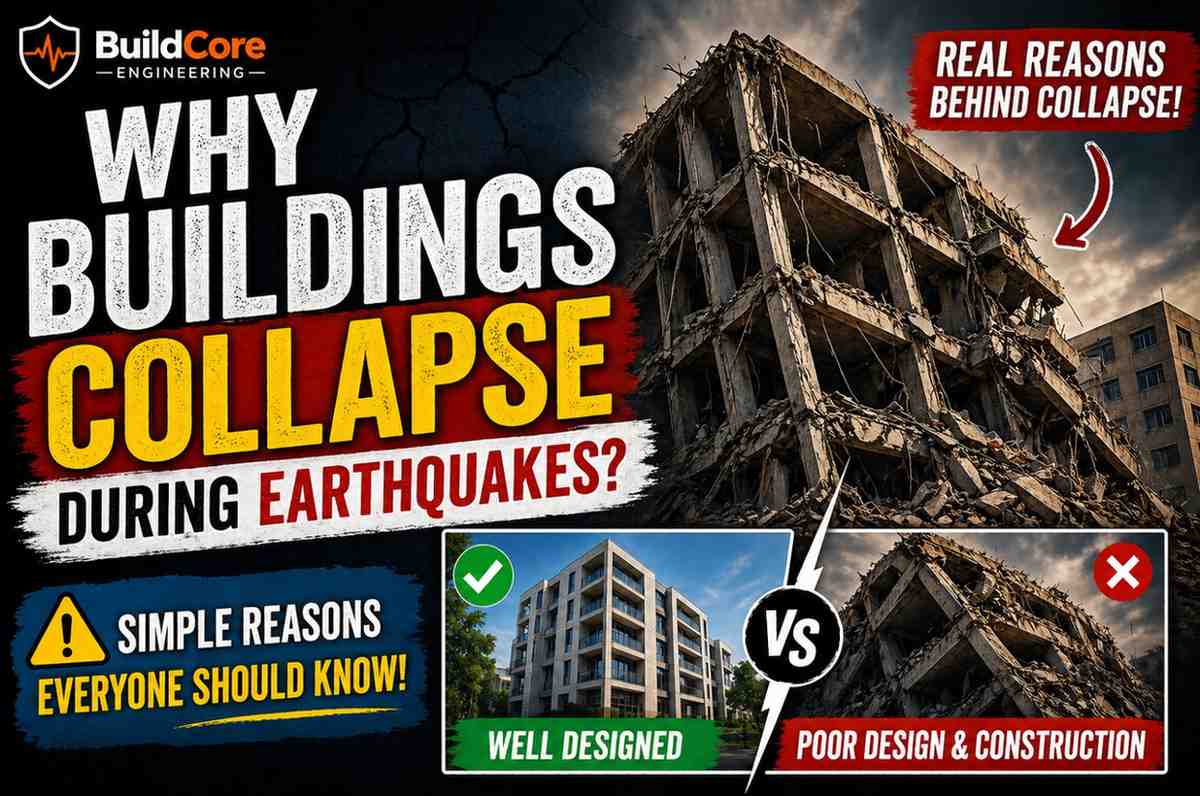
When an earthquake happens, the ground shakes violently. Buildings sitting on that ground are forced to move with it. They sway, vibrate, and deform in ways we don’t usually notice in everyday life. A properly designed building is expected to handle this movement. But when something is missing in design or construction, that same movement becomes dangerous.
One of the most common reasons buildings collapse is a weak ground floor. You’ve probably seen buildings with open parking or shops on the ground level, while the upper floors have walls. This creates an imbalance. The upper floors are stiff, but the ground floor is flexible. During an earthquake, the soft ground level bends excessively, and collapse often begins there.
Another major problem is imbalance in the structure. When weight and stiffness are not evenly distributed, buildings don’t move straight — they twist. This twisting puts extra stress on certain parts of the structure, which are not designed to handle it. Once one side starts failing, the damage spreads rapidly.
Every building also needs a clear path to transfer forces safely to the ground. This is called the load path. Think of it as a chain — if one link breaks, the entire system is compromised. Missing or weak connections between structural elements can interrupt this path and lead to failure.
👉 To understand this better, see Load Path in Structures
Another key issue is excessive movement. Buildings are designed to move during earthquakes, but only within safe limits. If the movement becomes too large, structural elements crack, joints fail, and the building loses its stability.
Construction quality plays a huge role as well. Even a perfect design can fail if it is not built properly. Poor materials, weak concrete, or incorrect reinforcement placement can turn a safe building into a dangerous one. Many collapsed buildings in past earthquakes showed clear signs of poor construction practices.
The foundation is equally critical. If the soil beneath the building is weak, or the foundation is not designed correctly, the entire structure becomes unstable. Problems like uneven settlement or soil failure can lead to sudden collapse.
Another often overlooked factor is redundancy. A safe building should have multiple ways to carry loads. If one element fails, others should take over. When a structure depends on too few components, the failure of a single element can trigger a complete collapse.
At its core, earthquake-resistant design is not about making buildings extremely strong. It’s about making them flexible, balanced, and capable of absorbing energy. Buildings should be able to move without breaking.
The real lesson is simple: earthquakes don’t destroy buildings — poor design and construction do.
Understanding this is not just important for engineers. It matters for everyone, because safer buildings mean safer lives.
👉 Good engineering doesn’t just build structures — it protects people.
🔗 Want to Learn More?
👉 Seismic Base Shear Calculation Explained
Latest Articles
Learn structural engineering concepts and practical insights
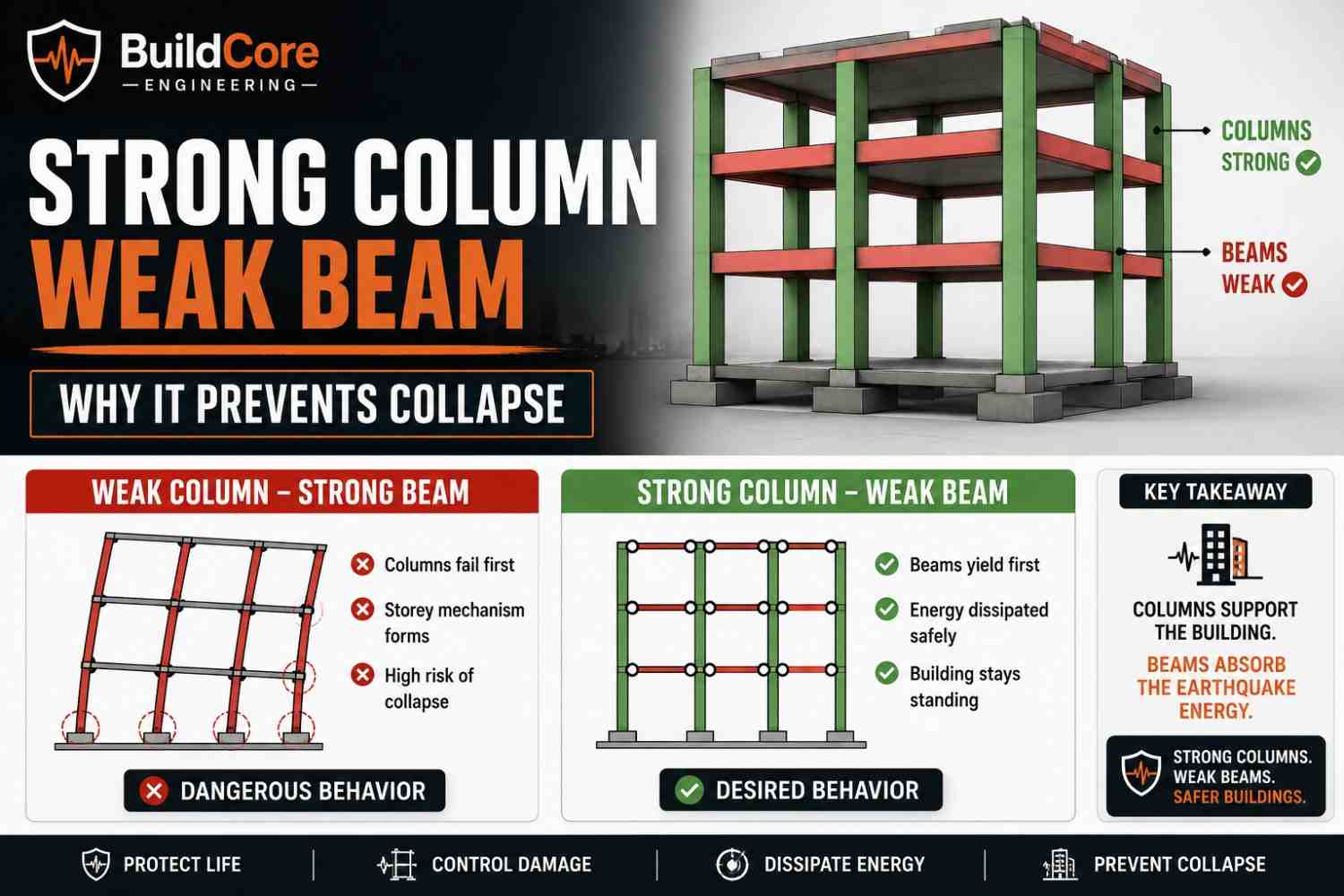
Strong Column Weak Beam Explained: The Most Important Rule in Earthquake Design
Learn what Strong Column Weak Beam means, why it is essential in seismic design, and how it prevents building collapse during earthquakes.
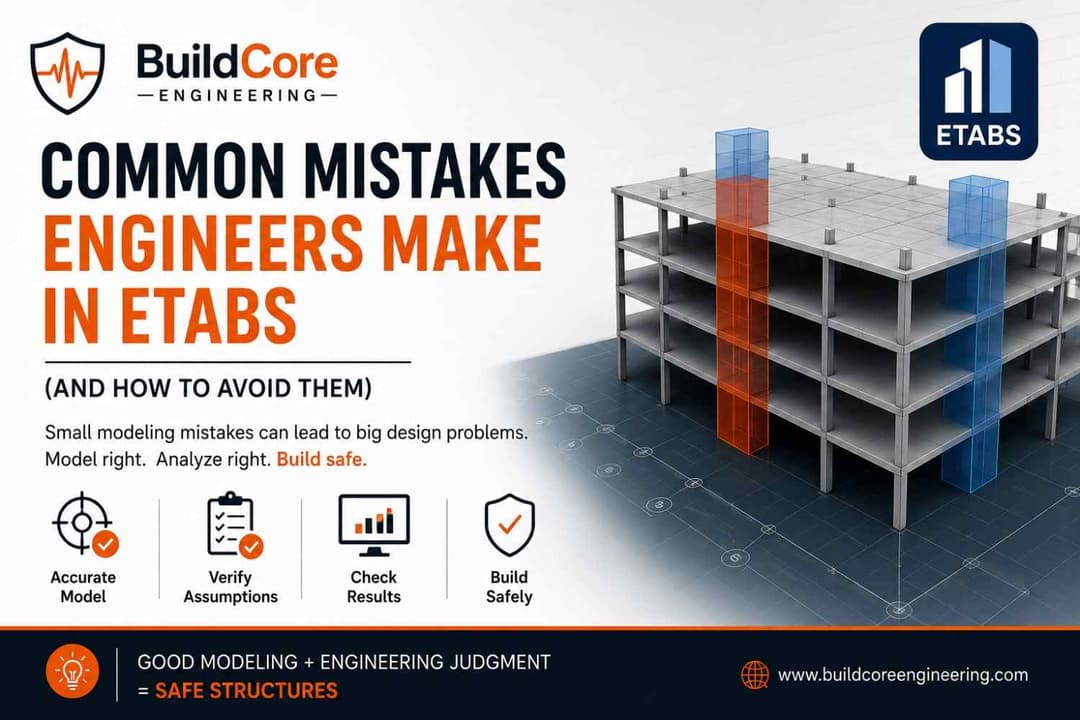
Common Mistakes Engineers Make in ETABS (And How to Avoid Them)
A practical guide to the most common ETABS modeling mistakes — from wrong mass source settings to incorrect diaphragm assumptions — and exactly how to fix them.
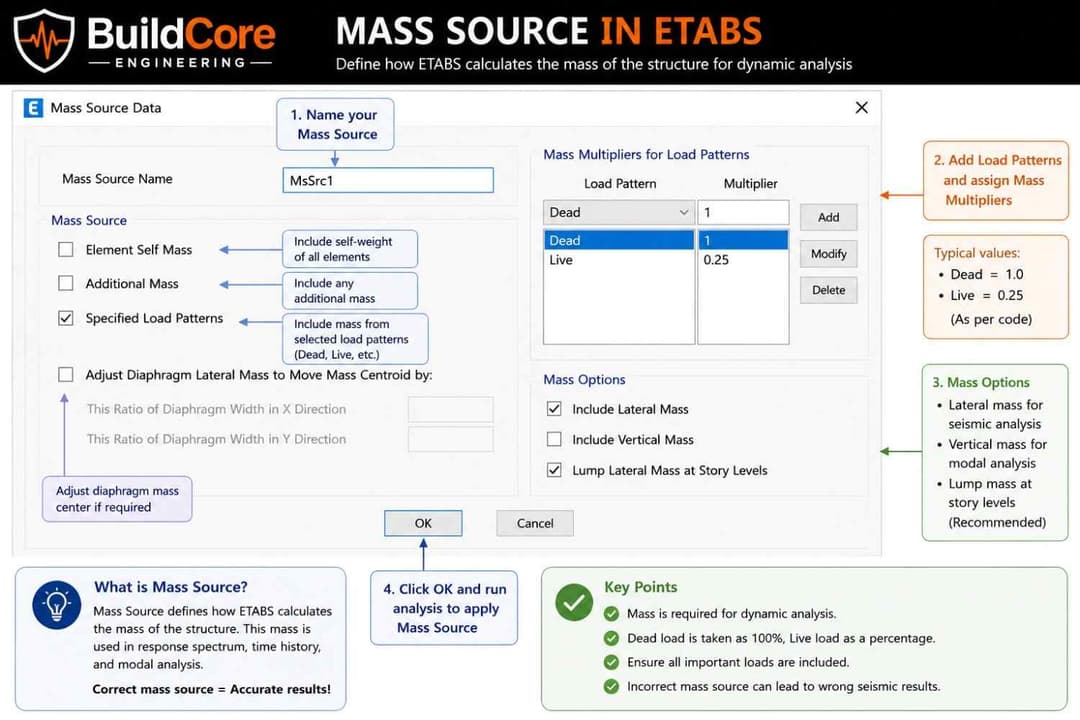
What is Mass Source in ETABS? A Simple Explanation for Structural Engineers
Learn what mass source is in ETABS, why it is important in seismic analysis, and how incorrect mass definition can lead to wrong results.