Seismic Load Path Explained: How Earthquake Forces Travel Through a Building
Published on 2024-12-20
When an earthquake hits a building, forces don’t just “appear” at one point.
👉 They travel through the structure.
This journey is called the Seismic Load Path — and understanding it is essential for safe design.
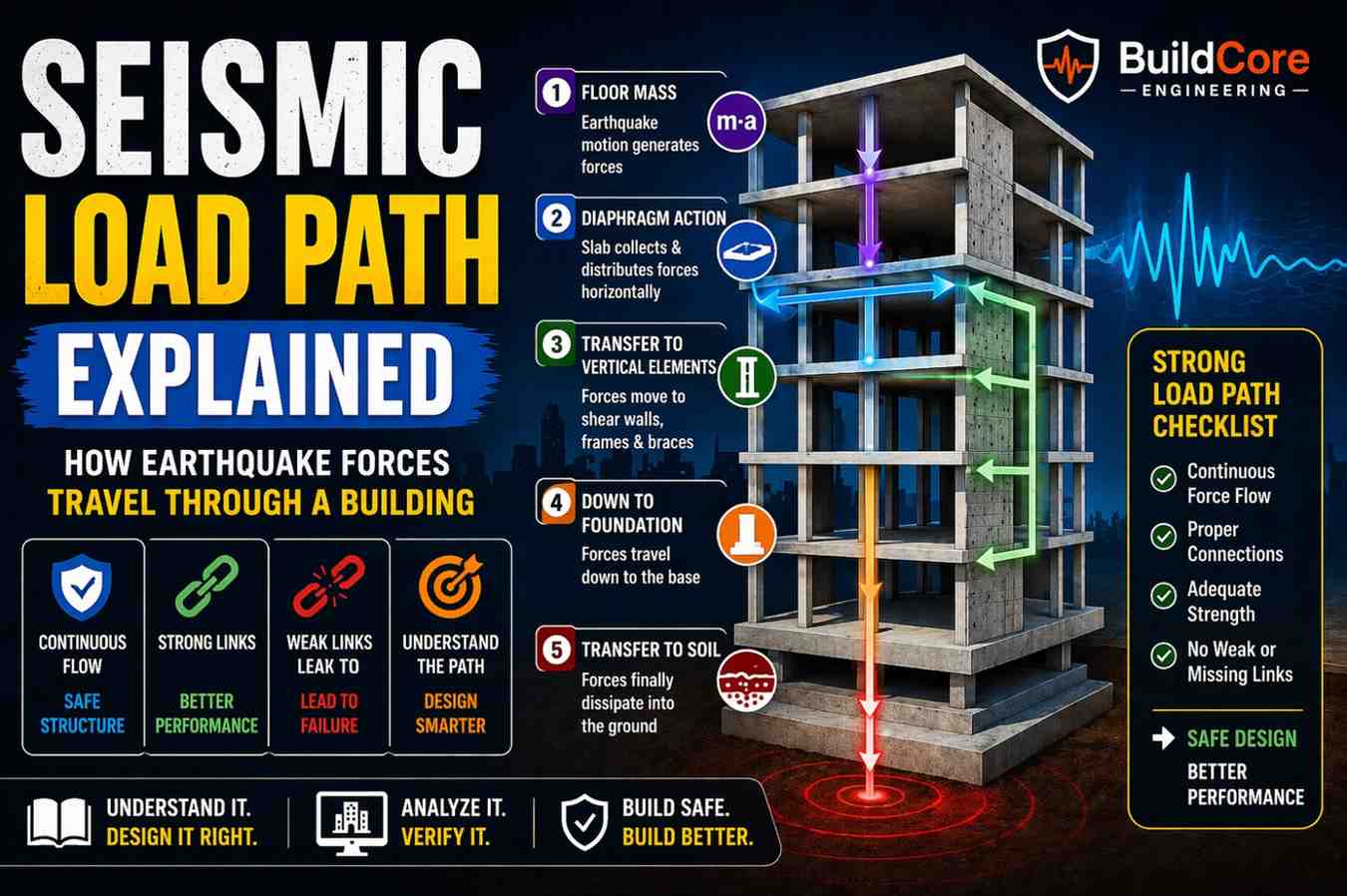
🧱 What is Seismic Load Path?
The load path is the route through which seismic forces move:
👉 From where they are generated
👉 To where they are resisted
🎯 Think Like This (Interactive Insight)
Imagine:
👉 You push the top of a building sideways
Now ask yourself:
- Where does that force go?
- Which elements carry it?
- What happens if one element fails?
👉 That’s load path thinking.
🌀 Step-by-Step Load Path
Let’s trace the journey of seismic forces:
🔹 Step 1: Floor Mass Generates Force
Earthquake acceleration causes:
👉 Each floor generates lateral force
🔹 Step 2: Slab Acts as Diaphragm
- Collects forces from floor mass
- Distributes them horizontally
👉 Learn more:
Rigid vs Semi-Rigid Diaphragm
🔹 Step 3: Transfer to Vertical Elements
Forces move into:
- Shear walls
- Frames
- Braced systems
🔹 Step 4: Vertical Load Resisting System
These elements:
- Carry forces downward
- Resist lateral loads
👉 This is where R factor behavior comes into play
Learn about R Factor
🔹 Step 5: Base Shear at Foundation
All forces combine at base:
👉 Learn calculation:
Base Shear Step-by-Step
🔹 Step 6: Transfer to Soil
Finally:
👉 Forces move into foundation
👉 Then dissipate into ground
⚠️ What Happens If Load Path is Broken?
If any link fails:
- Forces cannot transfer properly
- Stress concentrates
- Failure occurs
👉 This is how collapses happen
🧠 Real Engineering Insight
Most failures are NOT due to:
❌ Lack of strength
✔ But due to poor load path
🏗️ Common Load Path Problems
- Discontinuous shear walls
- Floating columns
- Weak diaphragm connections
- Soft story (critical issue)
👉 Read more:
Soft Story Irregularity
🖥️ Load Path in ETABS
In ETABS:
- Check force flow visually
- Review diaphragm behavior
- Verify load transfer
👉 Don’t just look at numbers — understand flow
🎯 Quick Self-Check (Interactive)
Ask yourself:
- Can forces move continuously from roof to foundation?
- Is there any weak or missing element?
- Are connections strong enough?
👉 If not → design is unsafe
🏁 Conclusion
Seismic load path is the backbone of structural behavior.
- Forces must flow continuously
- Every element must participate
- Weak links lead to failure
👉 A structure is only as good as its load path
Latest Articles
Learn structural engineering concepts and practical insights
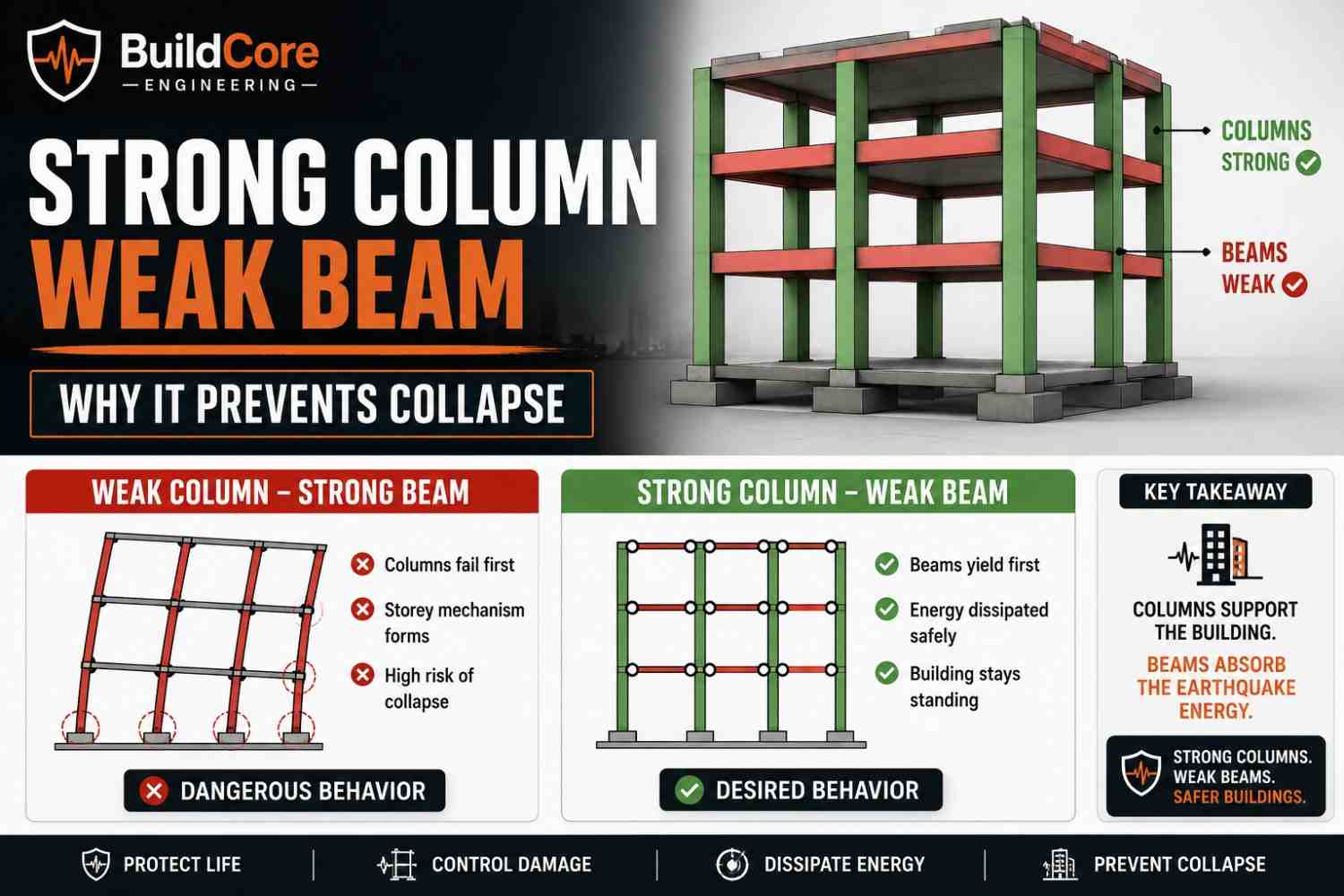
Strong Column Weak Beam Explained: The Most Important Rule in Earthquake Design
Learn what Strong Column Weak Beam means, why it is essential in seismic design, and how it prevents building collapse during earthquakes.

Common Mistakes Engineers Make in ETABS (And How to Avoid Them)
A practical guide to the most common ETABS modeling mistakes — from wrong mass source settings to incorrect diaphragm assumptions — and exactly how to fix them.
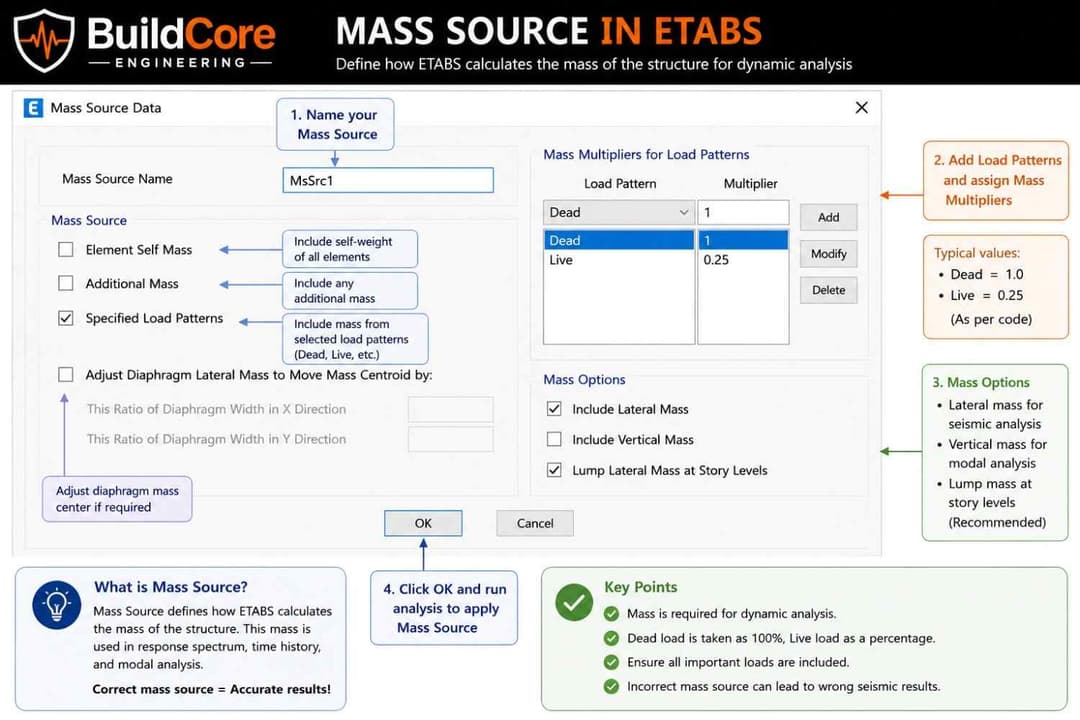
What is Mass Source in ETABS? A Simple Explanation for Structural Engineers
Learn what mass source is in ETABS, why it is important in seismic analysis, and how incorrect mass definition can lead to wrong results.