Before vs After Earthquake: What Really Changes in a Building?
Published on 2026-04-24
Before an earthquake, a building looks perfectly normal.
Straight columns.
Level floors.
No visible damage.
Everything seems safe.
But after an earthquake…
That same building may still be standing —
yet something inside has completely changed.
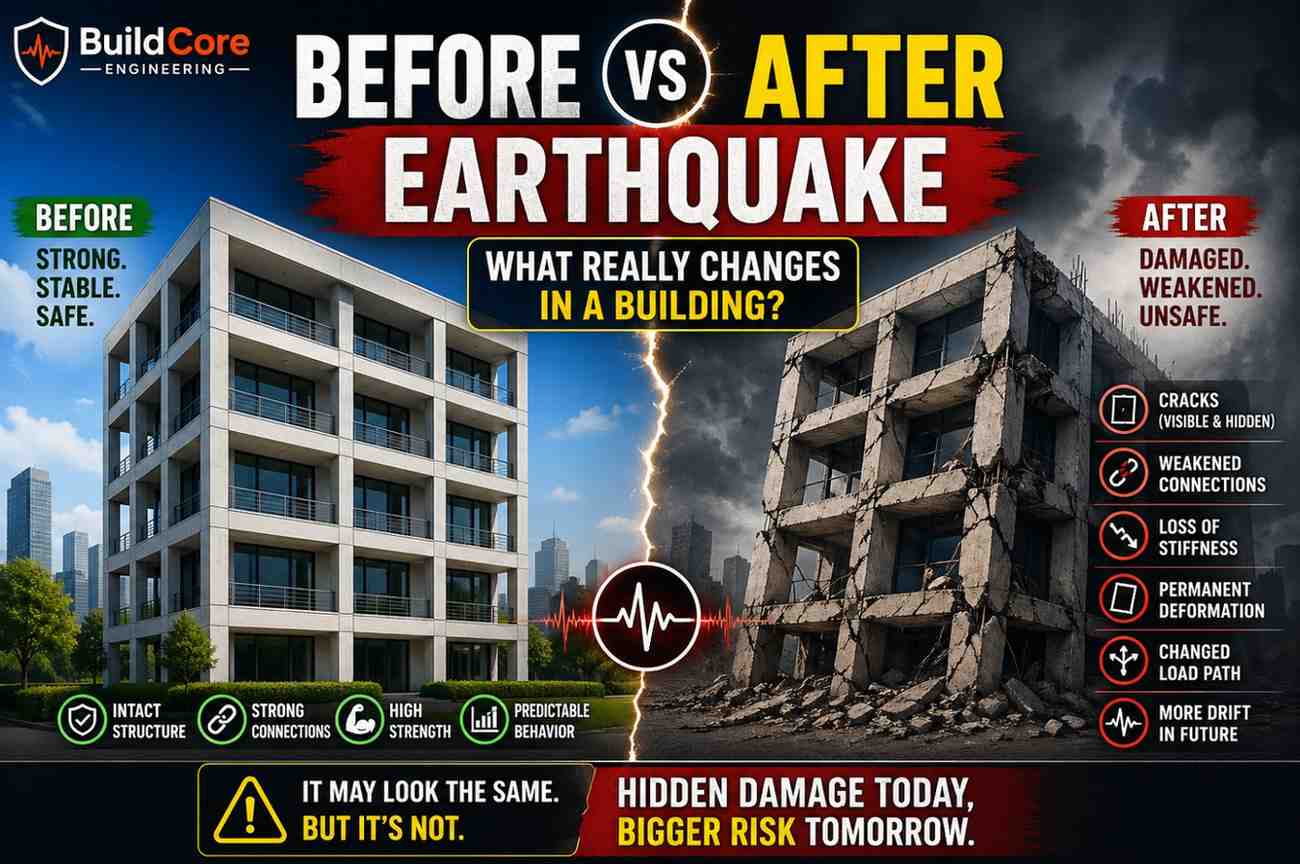
🧠 The Biggest Misunderstanding
Most people think:
“If a building is still standing, it is safe.”
But that is not always true.
Because earthquakes don’t just damage what you can see.
👉 They change what you cannot see.
🔍 What Changes During an Earthquake?
When the ground shakes, the building moves with it.
It bends.
It twists.
It vibrates.
This movement creates stress inside structural elements.
And that’s where the real changes begin.
⚠️ 1. Internal Cracking
After an earthquake, cracks may not always be obvious.
But inside the structure:
- Concrete develops microcracks
- Reinforcement may yield
- Connections weaken
👉 These are hidden damages
⚠️ 2. Loss of Stiffness
A building before an earthquake is stiff.
After an earthquake:
👉 It becomes more flexible
Why?
Because cracks reduce stiffness.
👉 More flexibility = more movement in future events
⚠️ 3. Permanent Deformation
Some buildings don’t return to their original shape.
They remain slightly tilted or displaced.
This is called:
👉 Permanent deformation
Even small deformation can affect safety.
⚠️ 4. Weakening of Critical Elements
Certain parts of the structure take more damage:
- Columns
- Beam-column joints
- Shear walls
These elements are crucial for stability.
👉 Their damage reduces overall strength
⚠️ 5. Change in Load Path
Before the earthquake:
👉 Forces follow a clear path
After damage:
👉 That path may be disturbed
Forces start redistributing in unintended ways.
🔗 Learn More:
⚠️ 6. Increased Drift in Future
Because stiffness is reduced:
👉 Future earthquakes cause larger movement
Even a smaller earthquake can become dangerous.
🧠 Real Insight
A building after an earthquake is not the same building.
Even if it looks fine.
👉 Its behavior has changed
⚖️ Before vs After (Simple Comparison)
| Before Earthquake | After Earthquake | |
|---|---|---|
| Stiffness | High | Reduced |
| Shape | Original | Slightly deformed |
| Internal State | Intact | Cracked / damaged |
| Behavior | Predictable | Uncertain |
🎯 Key Takeaway
Visible damage is not the full story.
👉 The real danger is hidden inside the structure
🏁 Conclusion
An earthquake doesn’t just test a building.
It changes it.
Some changes are visible.
Many are not.
👉 And those hidden changes are what make future failures more likely.
👉 A building that survives an earthquake is not always safe — it must be evaluated.
🔗 Want to Learn More?
👉 Why Drift is More Dangerous Than Force
Latest Articles
Learn structural engineering concepts and practical insights
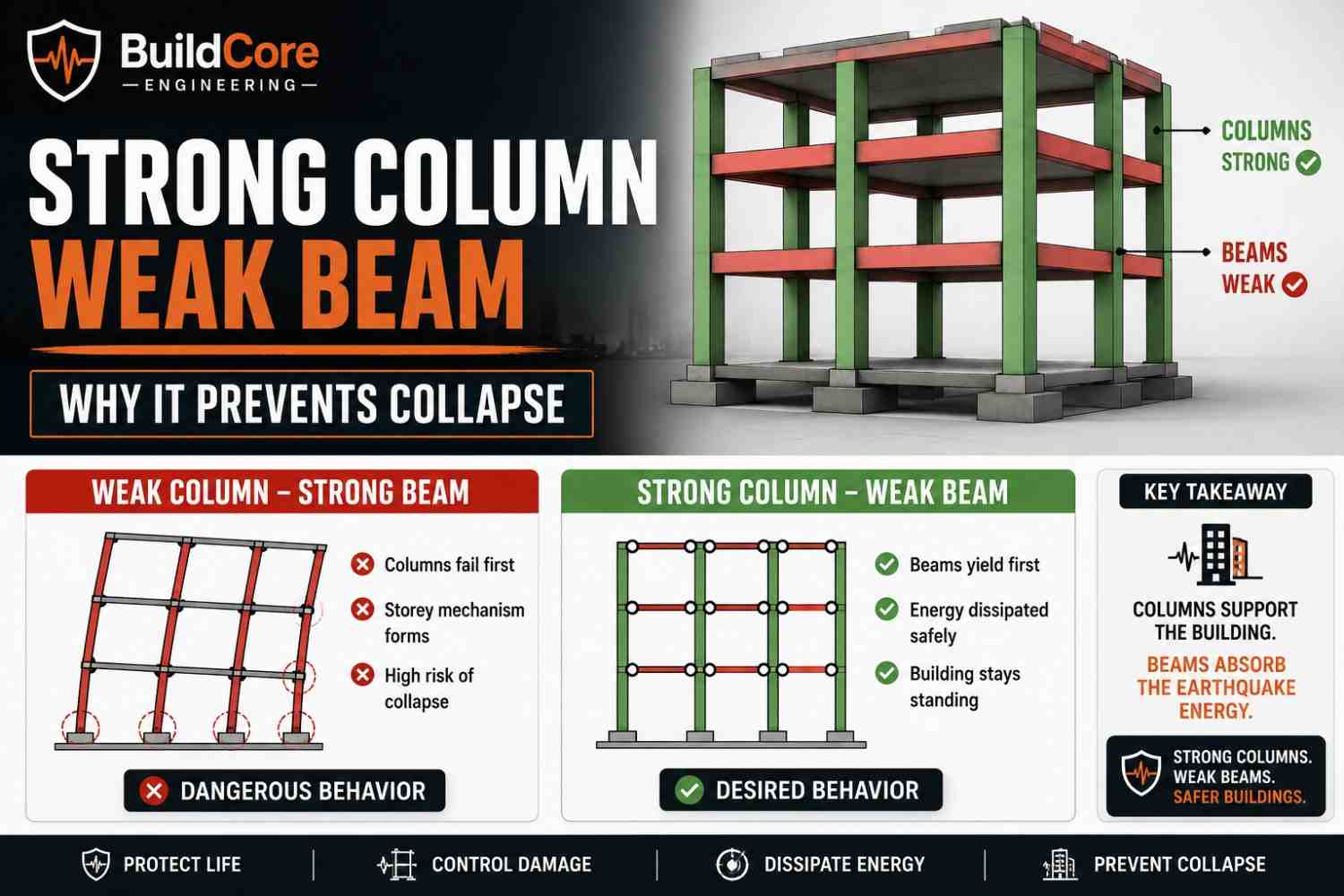
Strong Column Weak Beam Explained: The Most Important Rule in Earthquake Design
Learn what Strong Column Weak Beam means, why it is essential in seismic design, and how it prevents building collapse during earthquakes.

Common Mistakes Engineers Make in ETABS (And How to Avoid Them)
A practical guide to the most common ETABS modeling mistakes — from wrong mass source settings to incorrect diaphragm assumptions — and exactly how to fix them.
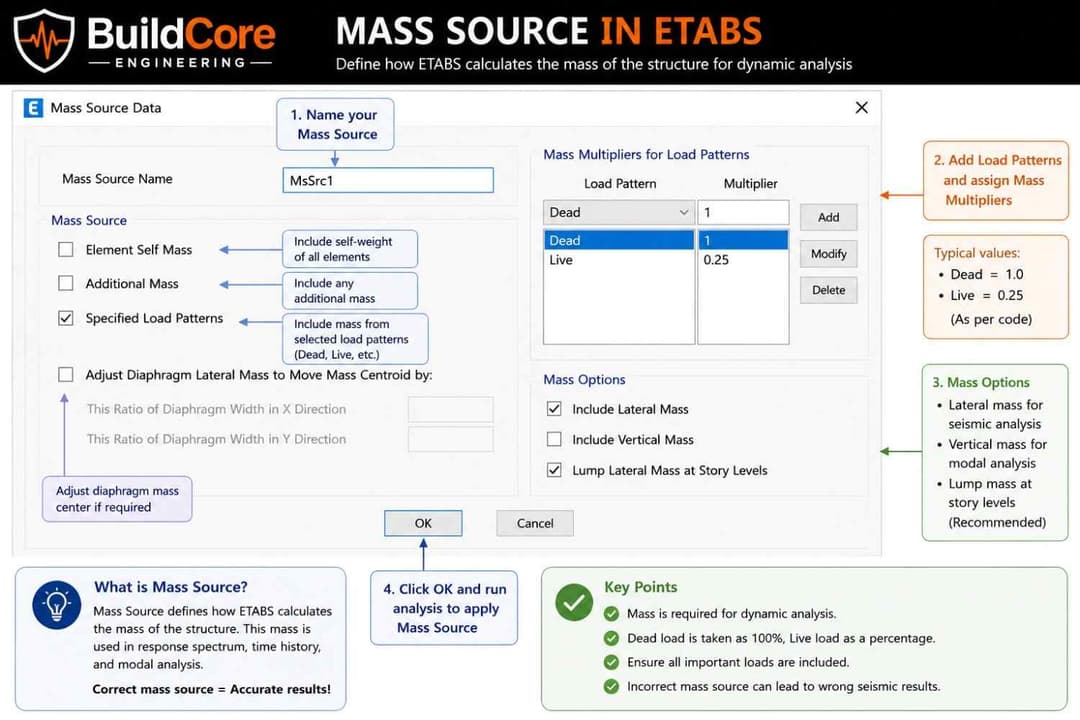
What is Mass Source in ETABS? A Simple Explanation for Structural Engineers
Learn what mass source is in ETABS, why it is important in seismic analysis, and how incorrect mass definition can lead to wrong results.