When Concrete Cracks: Is Your Building Still Safe?
Published on 2026-04-26
You notice a crack in a wall.
At first, it seems small.
Easy to ignore.
But then a question comes to mind:
👉 Is this normal… or is something wrong?
🧠 The Truth About Concrete
Concrete is strong.
But it is not perfect.
👉 In fact, cracking is natural in concrete.
Almost every concrete structure develops cracks at some point.
So the real question is not:
“Why is there a crack?”
👉 It is:
“What does this crack mean?”
🔍 Why Does Concrete Crack?
Concrete cracks for many reasons, even without heavy loads.
Some of the most common causes include:
- Drying shrinkage
- Temperature changes
- Settlement of soil
- Structural loading
These cracks can appear days, months, or even years after construction.
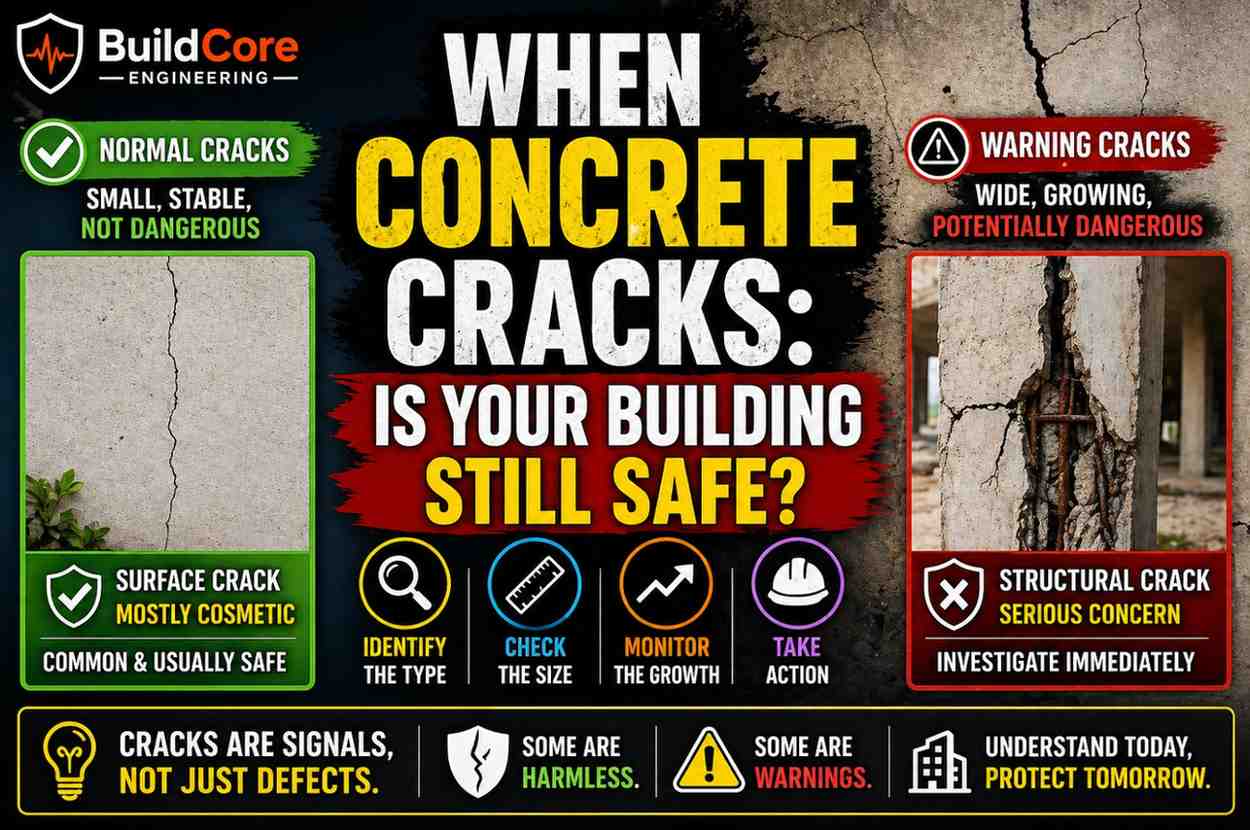
⚠️ Not All Cracks Are Dangerous
This is where most people get confused.
👉 Some cracks are harmless
👉 Some are warning signs
Understanding the difference is critical.
🟢 Harmless Cracks
Small, thin cracks are often not a concern.
These are usually caused by shrinkage or minor temperature changes.
They:
- Do not grow significantly
- Do not affect structural capacity
- Are mostly cosmetic
👉 These are common in plaster and surface concrete
🔴 Potentially Dangerous Cracks
Some cracks indicate deeper problems.
You should pay attention if cracks:
- Are wide or increasing in size
- Appear suddenly
- Occur in structural elements (columns, beams)
- Form diagonal patterns
- Are accompanied by tilting or settlement
👉 These may indicate structural distress
🧱 What Happens Inside the Structure?
Even small cracks can lead to internal changes.
Inside the concrete:
- Microcracks develop
- Reinforcement may start to carry more stress
- Stiffness reduces
👉 Over time, this can affect how the structure behaves
🌀 The Hidden Risk
Cracks don’t always mean immediate failure.
But they can change the structure’s response.
A cracked structure may:
- Become more flexible
- Experience larger movements
- Be more vulnerable in future loads
🔗 Related Insight
👉 Before vs After Earthquake: What Really Changes in a Building?
⚠️ Common Mistake
Many people ignore cracks because:
“They’ve been there for years.”
But cracks that:
- Grow
- Spread
- Change pattern
👉 Should never be ignored
🧠 Practical Rule
If a crack is:
- Stable → likely safe
- Growing → needs attention
👉 Growth is the key indicator
🎯 Key Takeaway
Concrete cracks are normal.
But not all cracks are safe.
👉 The importance lies in type, location, and behavior
🏁 Conclusion
A crack in concrete is not always a problem.
But it is always a signal.
Some signals are harmless.
Others are warnings.
👉 The difference is understanding what the structure is telling you.
👉 Don’t ignore cracks — understand them.
🔗 Want to Learn More?
👉 Why Buildings Collapse During Earthquakes
Latest Articles
Learn structural engineering concepts and practical insights

How AI is Changing Structural Engineering (And What Engineers Should Know)
Discover how AI is transforming structural engineering, what it can and cannot do, and what engineers need to understand to stay ahead.
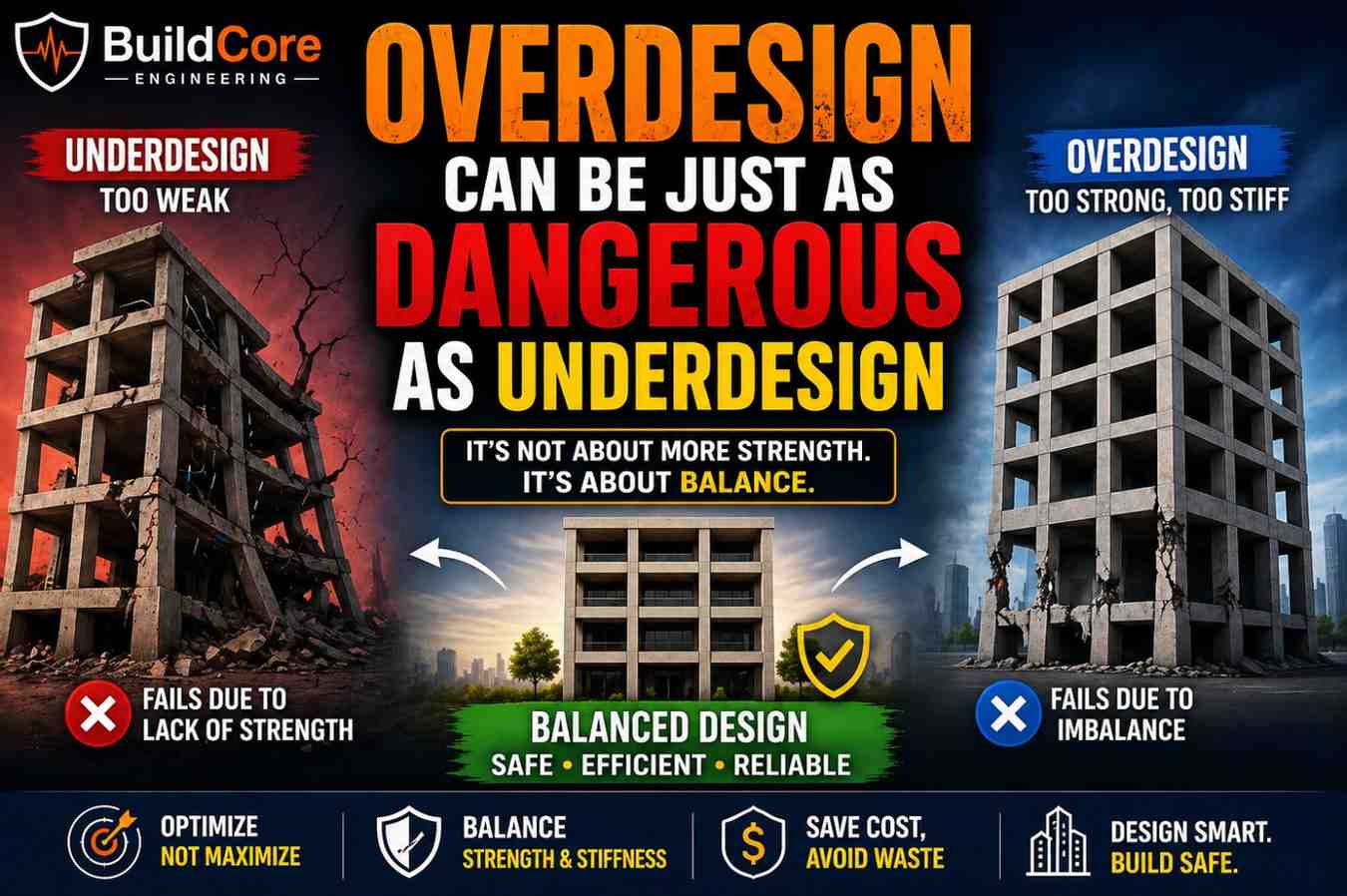
Why Overdesign Can Be Just as Dangerous as Underdesign
Understand why overdesign in structures can be just as risky as underdesign, and how imbalance in strength and stiffness leads to failure.
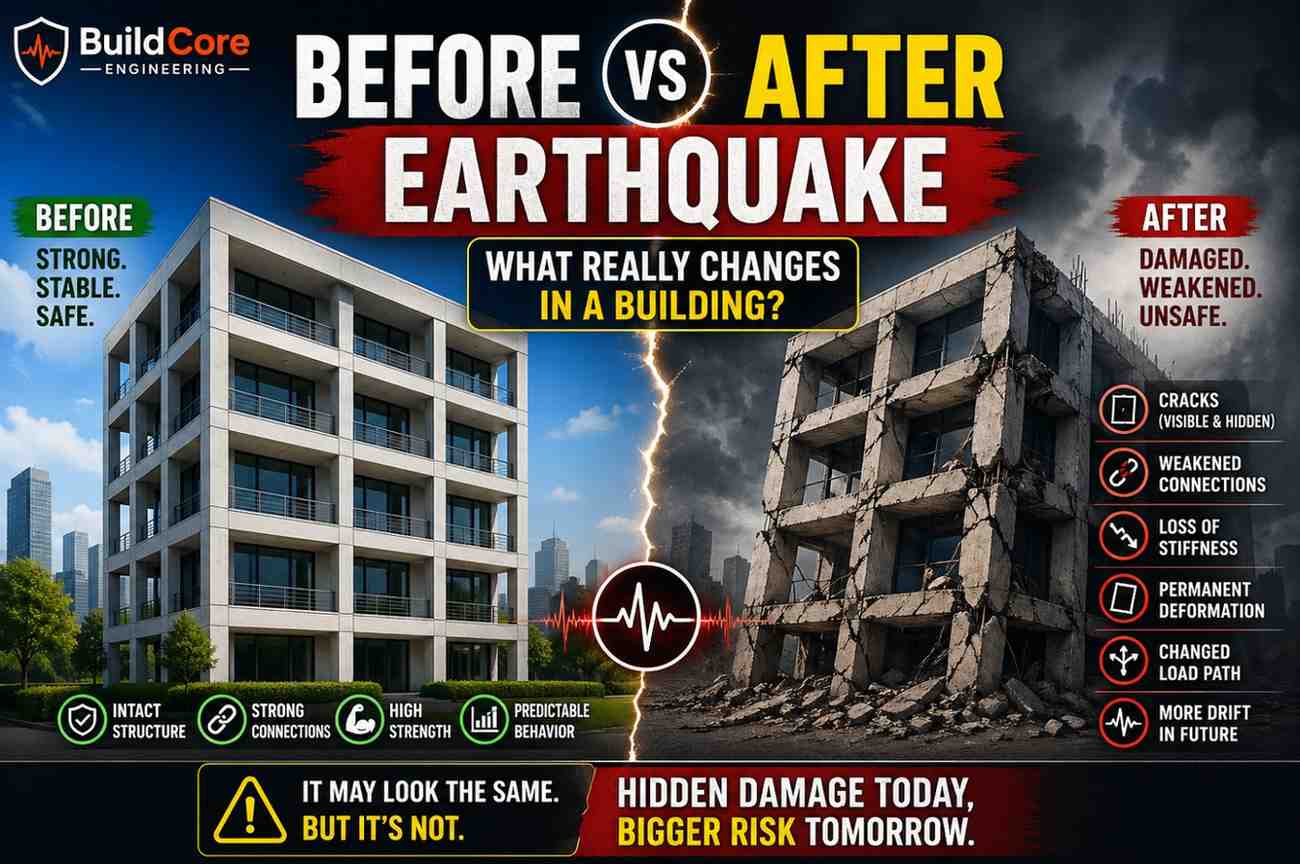
Before vs After Earthquake: What Really Changes in a Building?
Understand what really changes inside a building before and after an earthquake, including hidden damage and structural behavior.