Accidental Eccentricity (±5%) in Seismic Design: Why It Is Mandatory
Published on 2024-12-28
In seismic design, buildings rarely behave exactly as modeled.
👉 Small uncertainties always exist:
- Mass distribution
- Stiffness variation
- Construction imperfections
To account for these uncertainties, codes introduce Accidental Eccentricity (±5%).
🧱 What is Accidental Eccentricity?
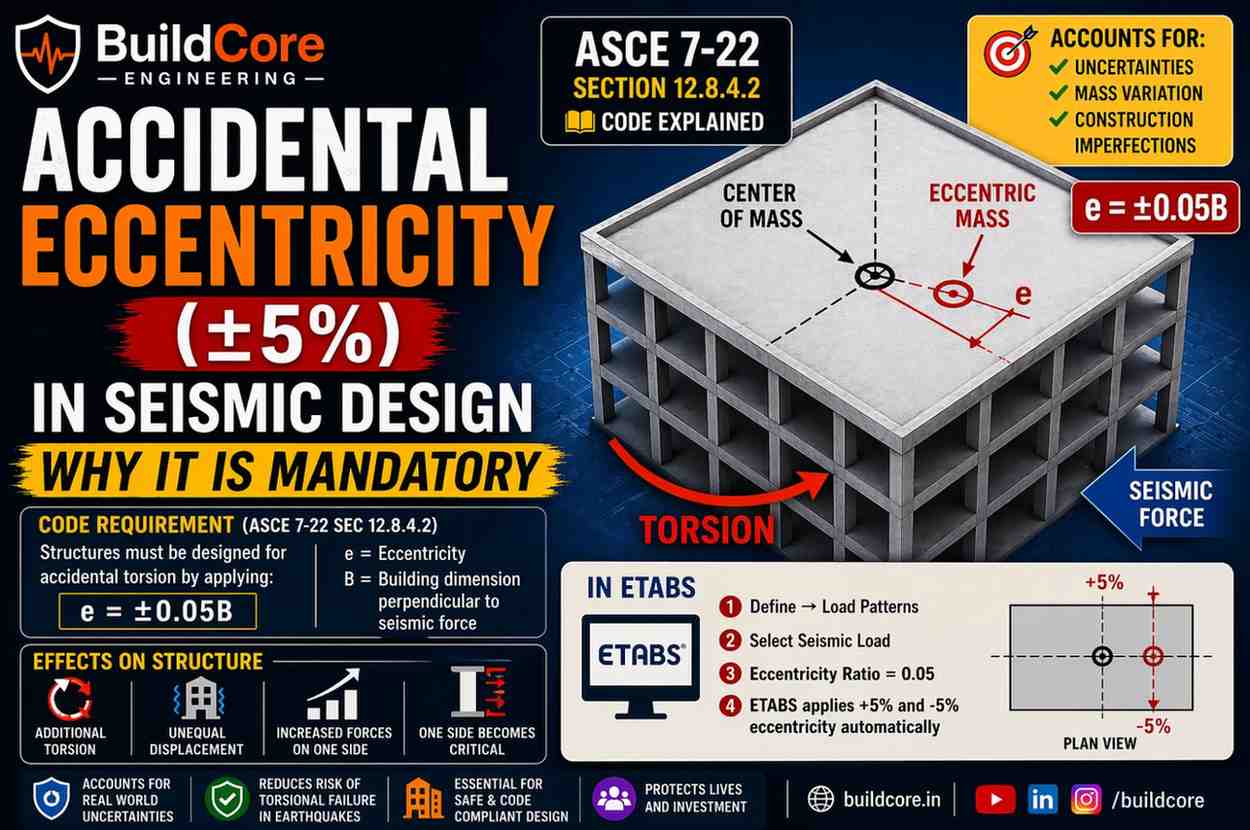
Accidental eccentricity is an artificial shift in mass location used to simulate uncertainties in structural behavior.
👉 It creates additional torsion in the building.
📘 Code Requirement (ASCE 7)
As per ASCE 7-22 Section 12.8.4.2 (also ASCE 7-16 Section 12.8.4.2):
👉 Structures must be designed for accidental torsion by applying:
Where:
- = eccentricity
- = building dimension perpendicular to seismic force
🎯 Why ±5% is Used
Real buildings are never perfectly symmetric.
Possible variations:
- Uneven mass distribution
- Construction tolerances
- Non-uniform stiffness
👉 ±5% ensures these effects are captured in design
🌀 Effect on Structural Behavior
Applying eccentricity causes:
- Additional torsion
- Unequal displacement
- Increased forces on one side
👉 One side becomes more critical
🔗 Connection with Torsional Irregularity
Accidental eccentricity is directly related to:
- ±5% creates torsion
- Ax amplifies it (if irregularity exists)
⚙️ Where It is Applied
Accidental eccentricity is applied to:
- Lateral load application point
- Mass center shift
- Seismic force distribution
🖥️ Accidental Eccentricity in ETABS
In ETABS:
- Go to Define → Load Patterns
- Select seismic load
- Enable Eccentricity Ratio = 0.05
- ETABS automatically applies:
- +5% eccentricity
- -5% eccentricity
👉 Both directions must be considered
⚠️ Important Code Insight
As per ASCE 7-22 Section 12.8.4.3:
👉 If torsional irregularity exists:
- Accidental torsion must be amplified using Ax
🧠 Practical Engineering Insight
Even if your building is perfectly symmetric:
👉 You STILL must apply ±5%
Why?
✔ Because real buildings are never perfect
⚠️ Common Mistakes
- Ignoring accidental eccentricity
- Applying only +5% (not ±)
- Not combining with Ax
- Assuming symmetry eliminates torsion
🎯 Quick Understanding
Think of it like:
👉 “What if the mass shifts slightly?”
👉 Code forces you to design for that scenario
🏁 Conclusion
Accidental eccentricity is a critical requirement in seismic design.
- It accounts for real-world uncertainties
- It introduces torsional effects
- It ensures safer design
👉 As per ASCE 7, ±5% eccentricity is mandatory — no exceptions.
👉 Good engineers design for imperfections, not perfection
Latest Articles
Learn structural engineering concepts and practical insights
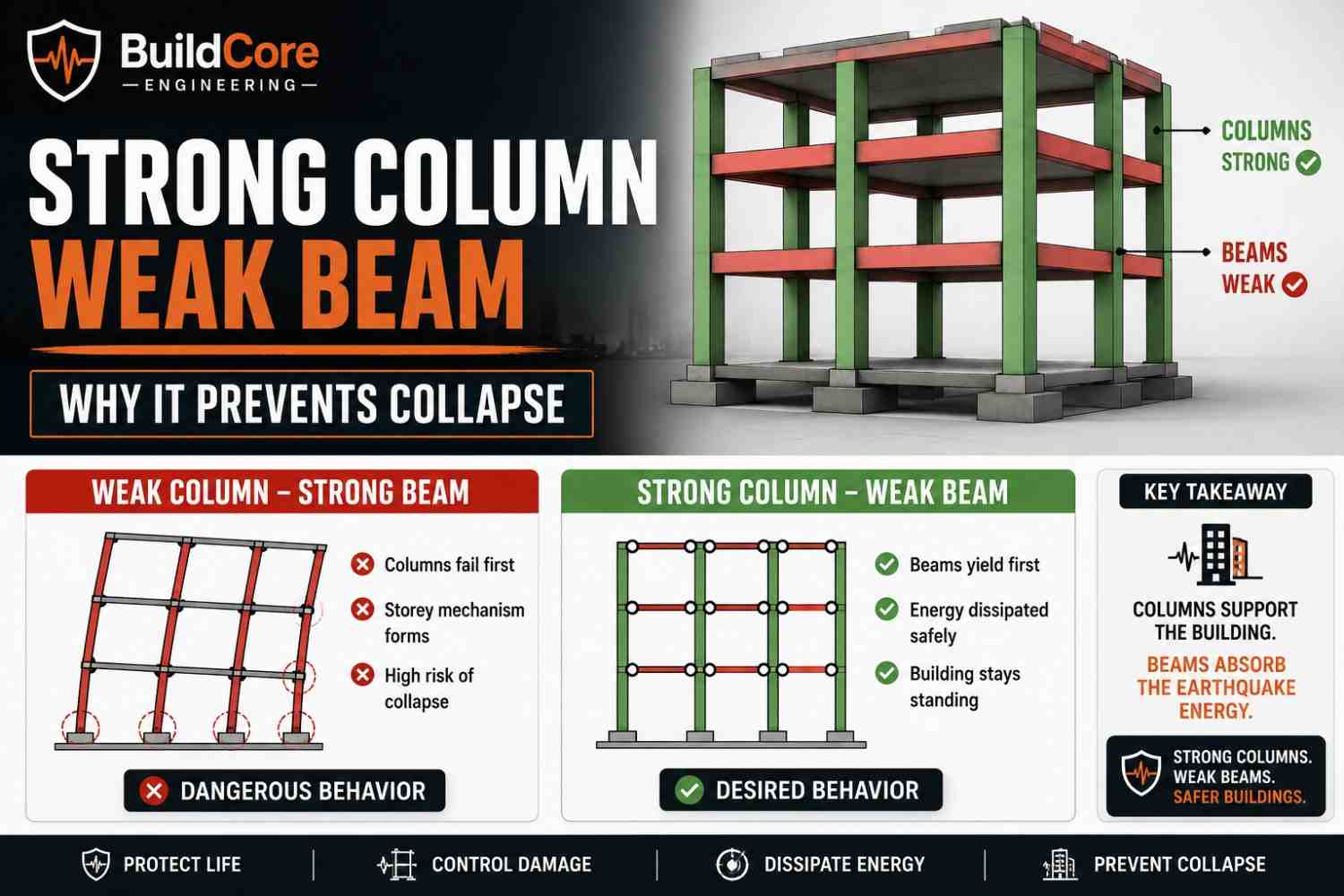
Strong Column Weak Beam Explained: The Most Important Rule in Earthquake Design
Learn what Strong Column Weak Beam means, why it is essential in seismic design, and how it prevents building collapse during earthquakes.
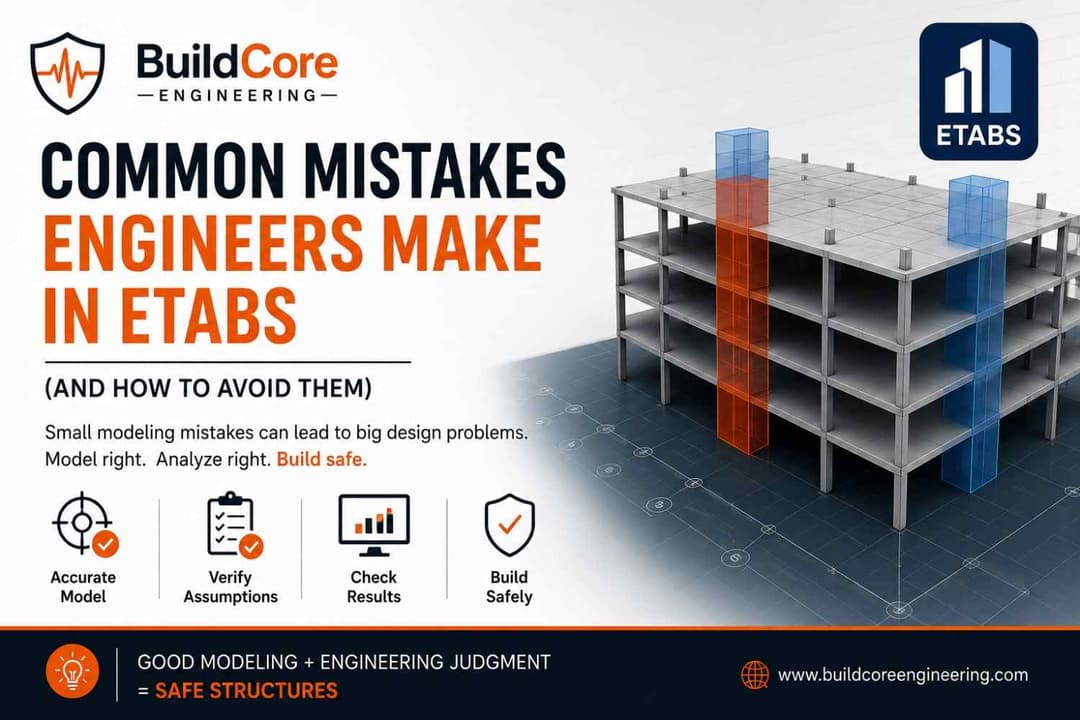
Common Mistakes Engineers Make in ETABS (And How to Avoid Them)
A practical guide to the most common ETABS modeling mistakes — from wrong mass source settings to incorrect diaphragm assumptions — and exactly how to fix them.
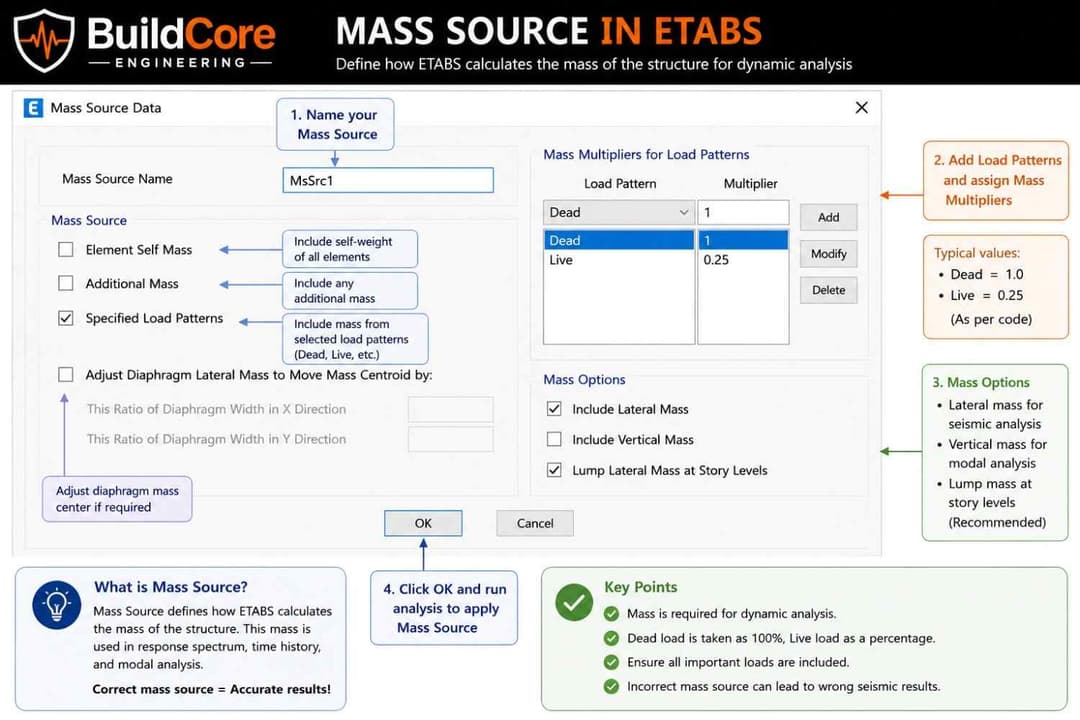
What is Mass Source in ETABS? A Simple Explanation for Structural Engineers
Learn what mass source is in ETABS, why it is important in seismic analysis, and how incorrect mass definition can lead to wrong results.